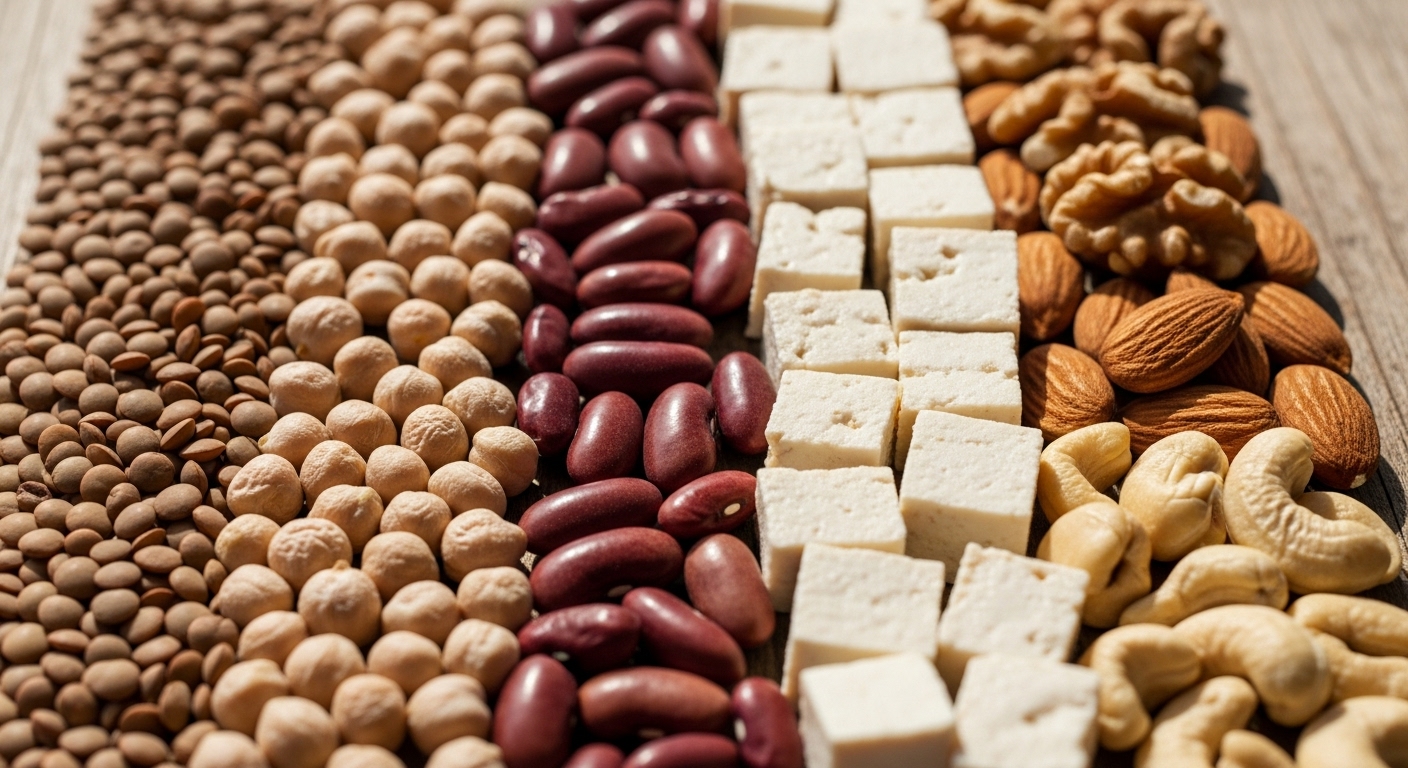
Can You Get Enough Protein From Plants?
Yes, getting enough protein from plants is not only possible but easy. Protein is present in virtually all plant foods, and meeting daily requirements on a vegan diet is straightforward. The myth that plants lack protein has been debunked by decades of research showing vegans typically exceed protein recommendations without any special effort.
The World Health Organization recommends 0.8g of protein per kg of body weight daily. For a 70kg person this is about 56g. Most vegans consume 60-80g daily without consciously trying.
Top Plant Protein Sources
Legumes
Lentils: 18g protein per cup (cooked) | Chickpeas: 15g per cup | Black beans: 15g per cup | Edamame: 17g per cup. Legumes are also rich in fiber, iron, and complex carbohydrates.
Soy Products
Tofu: 20g per cup | Tempeh: 31g per cup | Edamame: 17g per cup | Soy milk: 8g per cup. Soy is a complete protein containing all essential amino acids. Research confirms soy is safe and associated with reduced cancer risk.
"Nearly all plants contain protein. By eating a varied diet of whole plant foods, you will easily meet your protein needs." — Dr. Michael Greger, NutritionFacts.org
Seeds, Nuts, and Grains
Hemp seeds: 10g per 3 tbsp | Pumpkin seeds: 9g per ounce | Quinoa: 8g per cup (complete protein) | Oats: 6g per cup. These foods contribute significantly to daily protein intake while providing healthy fats and minerals.
Sample Day of Plant Protein
Breakfast: Oatmeal with hemp seeds (15g) | Lunch: Chickpea salad sandwich (25g) | Dinner: Tofu stir-fry with quinoa (30g) | Snack: Almonds (6g) = 76g total protein — exceeding the 56g recommendation for a 70kg person.
The Truth About Complete Proteins
The concept of protein combining has been debunked. Your body maintains a free amino acid pool that can be drawn upon throughout the day. Consuming varied plant foods over the course of a day provides all essential amino acids. The Academy of Nutrition and Dietetics confirms this in their official position paper.
Protein for Athletes
Vegan athletes need 1.2-2.0g per kg of body weight depending on activity level. World-class vegan athletes include Novak Djokovic (tennis), Venus Williams (tennis), Lewis Hamilton (F1), and Scott Jurek (ultramarathon). Their success demonstrates that plant protein fully supports peak athletic performance.
Plant Protein Around the World
Every culture has traditional plant protein dishes that can inspire vegan eating. Indian cuisine offers dal (lentil stew), chana masala (spiced chickpeas), and dosa (fermented lentil crepes). Ethiopian cuisine features injera with lentil and split pea stews. Middle Eastern cuisine provides hummus, falafel, and lentil soup. East Asian cuisines offer tofu, tempeh, edamame, and seitan preparations. Latin American cuisines contribute bean tacos, lentil soup, and rice and bean combinations. Exploring these global traditions reveals that plant-based protein is not a modern invention but a culinary heritage shared across human cultures.
These traditional dishes also demonstrate that plant proteins are not inferior substitutes but celebrated foods in their own right. A well-prepared lentil dal is not pretending to be meat — it is a complete and satisfying dish with its own distinct flavors and cultural significance. This perspective shifts the conversation from what vegans cannot eat to the rich diversity of foods that plant-based eating makes possible. Exploring global cuisines is one of the most enjoyable aspects of the vegan transition, opening doors to flavors and cooking techniques that omnivorous diets often overlook.
Protein Timing and Athletic Performance
Athletes and active individuals can meet their protein needs on a plant-based diet with attention to timing. Current sports nutrition research recommends consuming 20-40 grams of protein every 3-4 hours rather than a single large serving. This approach supports muscle protein synthesis throughout the day. Practical examples include: a tofu scramble at breakfast (20g protein), a lentil soup at lunch (18g), hummus with vegetables for a snack (8g), and a quinoa and black bean bowl at dinner (25g).
Post-workout protein is particularly important for recovery. Plant-based options like pea protein powder, soymilk, or a peanut butter and banana sandwich provide the amino acids needed for muscle repair. The American College of Sports Medicine confirms that plant-based diets can support athletic performance across all levels of activity, from recreational exercise to elite competition. Many world-class athletes including Novak Djokovic, Venus Williams, and Lewis Hamilton follow plant-based diets, demonstrating that plant protein is fully compatible with peak physical performance.
Comparing Plant and Animal Protein
Understanding the differences between plant and animal protein helps optimize vegan nutrition. Plant proteins come packaged with fiber, antioxidants, and phytonutrients that animal proteins lack. While animal proteins are complete (containing all essential amino acids), plant proteins are not inferior — eating a variety of plant proteins throughout the day ensures complete amino acid intake. The body maintains an amino acid pool that compensates for temporal gaps, meaning you do not need to combine proteins at every meal as was once believed.
Plant Protein Myths Debunked
Several myths about plant protein persist despite contrary evidence. Myth: plant proteins are inferior because they are incomplete. Fact: all plant foods contain all essential amino acids, though proportions vary. Myth: you cannot build muscle on plant protein. Fact: a 2024 meta-analysis in Sports Medicine found no difference in muscle growth between plant and animal protein groups when total protein intake was matched. Myth: soy protein is unhealthy. Fact: the FDA confirms that soy protein is associated with reduced heart disease risk.
Where do vegans get protein?
From legumes (lentils, chickpeas, beans), soy products (tofu, tempeh), nuts, seeds, whole grains, and even vegetables. All plants contain protein.
How much protein do I need per day?
The WHO recommends 0.8g per kg of body weight. A 70kg person needs about 56g daily, easily achieved with three balanced vegan meals.
Do I need protein powder?
No, whole food sources like lentils, tofu, and quinoa provide protein along with fiber and micronutrients. Powders are optional for convenience.
Is soy protein healthy?
Yes, decades of research confirm soy is safe and health-promoting. The FDA recognizes soy protein as heart-healthy and it is associated with reduced cancer risk.
Can I build muscle on plant protein?
Absolutely. Many elite athletes thrive on plant protein. The key is adequate total protein intake and sufficient calories.
What is the highest plant protein source?
Seitan provides 25g protein per 100g — comparable to chicken. Tempeh provides 19g, and pumpkin seeds provide 19g per 100g.
Balanced Nutrition Planning on a Vegan Diet | Iron Rich Foods for a Plant-Based Diet | Understanding Plant-Based Eating | Natural Energy Increase Through Plant-Based Living