Can You Get Enough Calcium From Plants Without Dairy?
Yes, you can get all the calcium you need from plants. The dairy industry has spent decades promoting milk as essential for bone health, but the scientific evidence tells a different story. Many plant foods are rich in calcium, and calcium from many plant sources is better absorbed than calcium from cow's milk.
The National Institutes of Health recommends 1,000mg of calcium daily for most adults. This target is easily achieved through a well-planned vegan diet rich in leafy greens, fortified foods, and calcium-rich plant proteins.
Best Plant Sources of Calcium
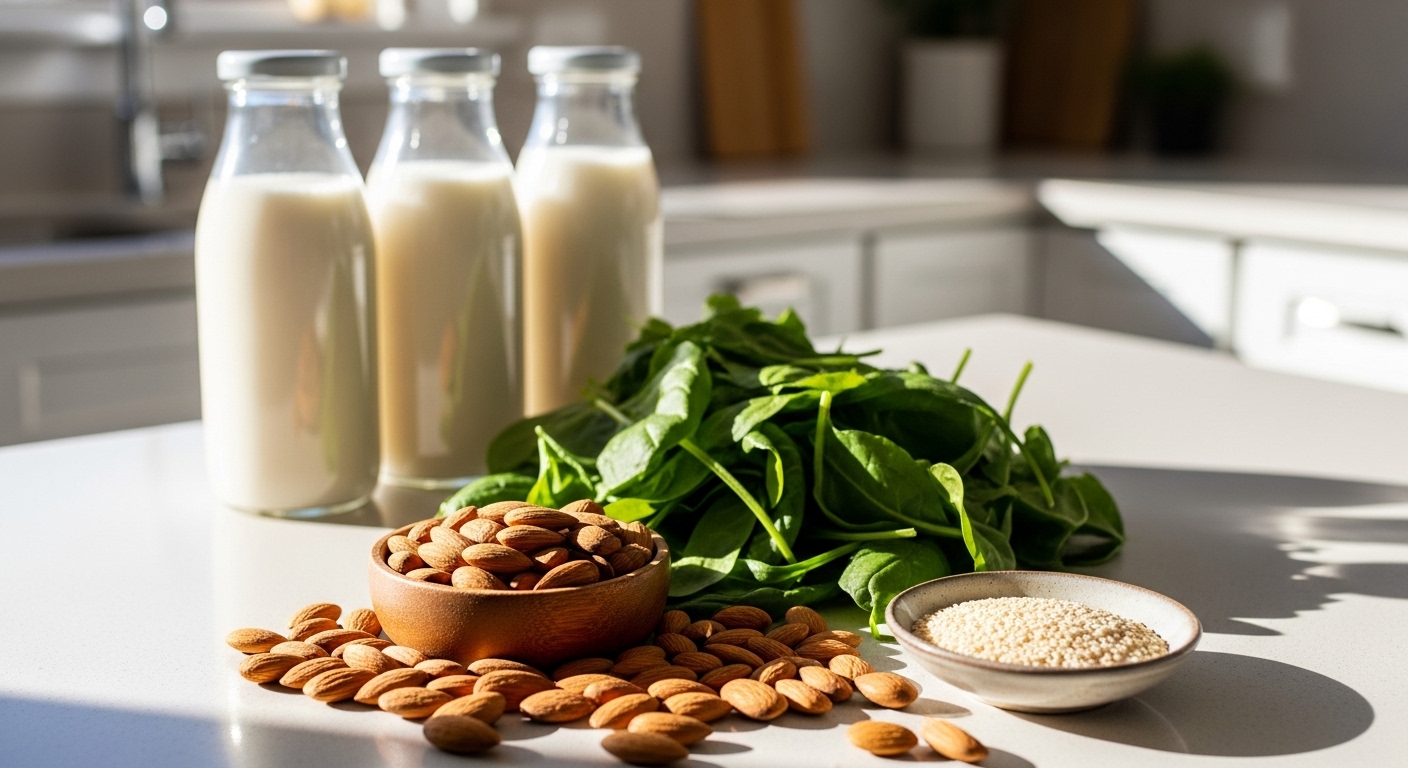
Fortified plant milks: 300-450mg per cup | Calcium-set tofu: 350-400mg per half-cup | Collard greens: 268mg per cup (cooked) | Kale: 177mg per cup | Tahini: 130mg per 2 tbsp | Chia seeds: 180mg per 2 tbsp | Blackstrap molasses: 180mg per tbsp
"Countries with the highest dairy consumption have the highest rates of osteoporosis. Dairy is not the solution for bone health." — Dr. T. Colin Campbell
Calcium Absorption: Plants vs. Dairy
Calcium absorption from kale is 40.9% compared to 32.1% for milk (American Journal of Clinical Nutrition). Vitamin D enhances absorption while high sodium and caffeine reduce it. However, these effects are minimal in a balanced diet.
Bone Health Beyond Calcium
Bone health involves more than calcium. Vitamin D is essential for absorption, vitamin K2 directs calcium to bones, and weight-bearing exercise stimulates bone formation. The WHO identifies physical activity as equally important as calcium intake for bone health.
Osteoporosis and Dairy Consumption
Countries with the highest dairy consumption (USA, Sweden, UK) have the highest hip fracture rates. Countries with the lowest dairy consumption have the lowest rates. The Adventist Health Study found vegans have comparable or better bone health than dairy consumers.
Practical Tips
Drink fortified plant milk daily, include leafy greens in at least two meals, eat calcium-set tofu weekly, add tahini to dressings, and get 15-30 minutes of sunlight for vitamin D. Maria, a 62-year-old with osteopenia, reversed her condition through a plant-based diet rich in these foods combined with yoga and walking.
Calcium Across the Lifespan
Calcium needs vary throughout life, and a well-planned vegan diet meets requirements at every stage. Children and adolescents need adequate calcium for growing bones, with requirements of 800-1,300mg daily depending on age. Fortified plant milks, calcium-set tofu, and leafy greens provide these amounts easily. Pregnancy increases calcium requirements to support fetal skeletal development, and the body adapts by increasing absorption efficiency. Breastfeeding mothers need additional calcium, which can be obtained through the same plant sources recommended for general nutrition.
For older adults, calcium requirements increase to 1,200mg daily for women over 50 and men over 70. Vitamin D becomes increasingly important with age as the skin becomes less efficient at synthesizing it from sunlight. The National Osteoporosis Foundation recommends a combined approach of adequate calcium and vitamin D intake plus weight-bearing exercise for bone health at all ages. A plant-based diet combined with regular physical activity provides an optimal foundation for lifelong bone health without the need for dairy products.
Calcium-Rich Recipes for Every Meal
Incorporating calcium-rich foods into daily meals is simple with some planning. For breakfast, try fortified plant milk smoothies with calcium-set tofu. For lunch, a kale and white bean salad provides calcium alongside vitamin C for absorption. For dinner, broccoli and chickpea stir-fry with tahini dressing delivers calcium from multiple sources. Sesame seeds, almonds, and fortified orange juice make excellent snacks and additions to any meal.
A sample high-calcium day might include: breakfast oatmeal made with fortified soymilk (350mg calcium) topped with almonds (80mg), lunch kale salad with white beans and tahini dressing (300mg), afternoon snack of fortified orange juice (350mg), and dinner tofu and broccoli stir-fry made with calcium-set tofu (400mg). This provides approximately 1,480mg of calcium, exceeding the recommended daily intake of 1,000mg for most adults. The key to adequate calcium intake on a vegan diet is intentional inclusion of fortified foods and calcium-rich plants at every meal.
Vitamin D and Bone Health
Vitamin D works synergistically with calcium to maintain bone health, and vegans need to ensure adequate intake of both. Vitamin D deficiency is common across all dietary patterns, but vegans may be at higher risk if they do not consume fortified foods or supplement. The NIH Office of Dietary Supplements recommends 600-800 IU daily for most adults. Good vegan sources include fortified plant milks (100-150 IU per cup), fortified orange juice, sun-exposed mushrooms, and supplements. Vitamin D2 is vegan but less effective than vitamin D3; look for vegan D3 derived from lichen for optimal absorption.
Calcium and Vitamin K2 Synergy
Vitamin K2 works alongside calcium and vitamin D to direct calcium to bones rather than soft tissues. While K2 is traditionally found in animal products, vegans can produce it through gut bacteria or consume it from fermented plant foods like natto (fermented soybeans). A 2022 review in Nutrients found that adequate K2 intake supports bone density and cardiovascular health by ensuring proper calcium distribution. Including fermented foods in a vegan diet provides additional benefits beyond basic nutrition that support long-term skeletal and vascular health.
Building Bone Health Beyond Calcium
Bone health depends on more than calcium alone. Regular weight-bearing exercise, adequate vitamin D, vitamin K2, magnesium, and potassium all contribute to bone density. A whole foods plant-based diet combined with strength training provides the comprehensive support bones need at every age. The NIH Bone Health Portal offers evidence-based guidance on maintaining skeletal health through nutrition and lifestyle factors that work together for optimal results.
Can vegans get enough calcium without dairy?
Yes. Fortified plant milk, calcium-set tofu, leafy greens, and tahini provide abundant calcium. Many plant sources have better bioavailability than dairy.
How much calcium do adults need?
The NIH recommends 1,000mg daily (1,200mg for women over 50 and men over 70). Easily achieved on a well-planned vegan diet.
Is plant calcium as absorbable as dairy?
For many sources like kale (40.9%) and broccoli, absorption exceeds dairy (32.1%). Vitamin C from plant foods further enhances absorption.
What is the best plant calcium source?
Calcium-set tofu provides 350-400mg per half-cup. Fortified plant milks provide 300-450mg per cup — equivalent to dairy.
Do vegans get osteoporosis more often?
No. The Adventist Health Study found vegans have comparable or better bone health. Countries with highest dairy consumption have highest osteoporosis rates.
Can children get enough calcium on a vegan diet?
Yes. Fortified plant milks, calcium-set tofu, and leafy greens provide children all the calcium they need for healthy growth.
Iron Rich Foods for a Plant-Based Diet | Essential Vitamin Sources on a Vegan Diet | Balanced Nutrition Planning | Getting Enough Protein From Plants