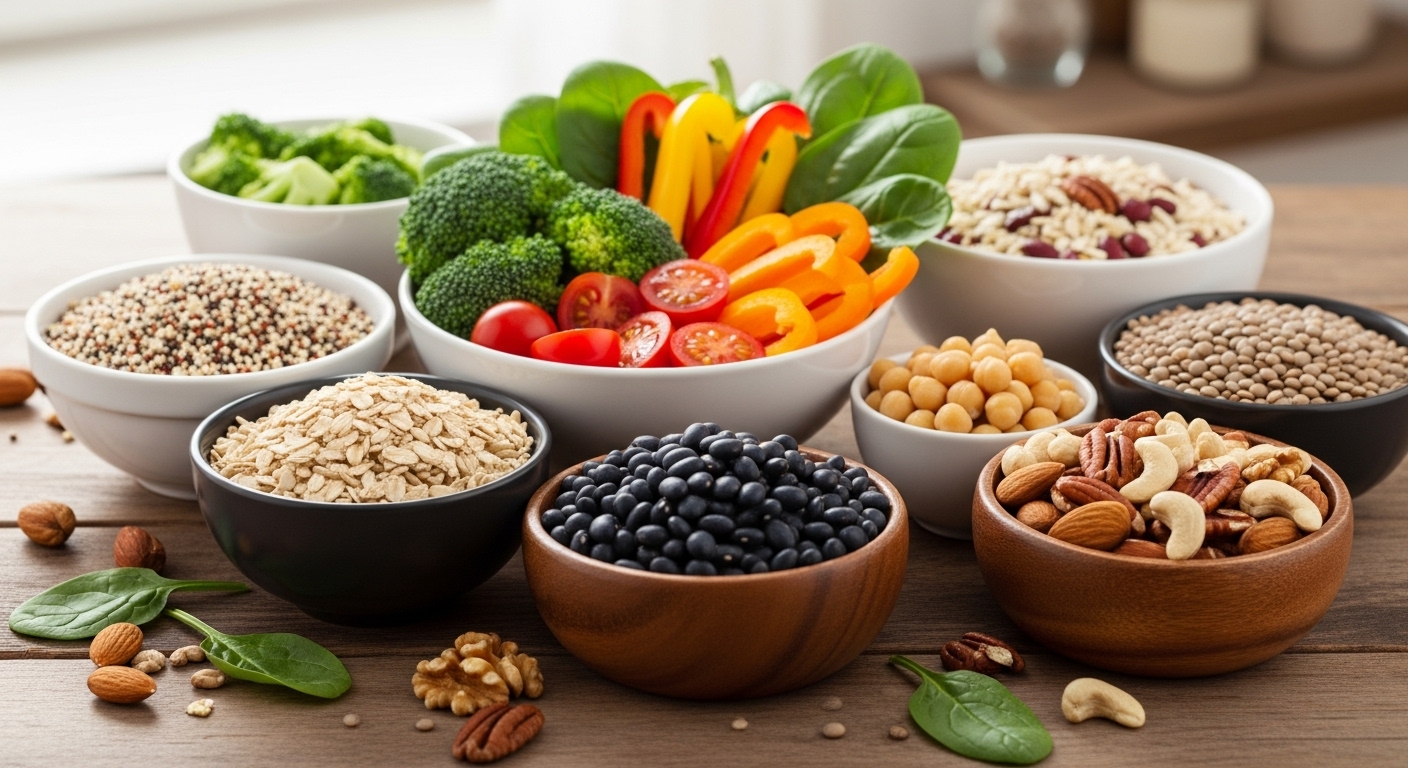
How Do You Plan Balanced Nutrition on a Vegan Diet?
Balanced nutrition on a vegan diet is achieved by eating a variety of whole plant foods to meet all nutrient needs. The key principles are variety, color, and adequacy — eating a rainbow of fruits and vegetables, incorporating protein-rich legumes and whole grains, and ensuring adequate intake of key nutrients. The Academy of Nutrition and Dietetics confirms that with proper planning, vegan diets meet all nutritional requirements.
The foundation is whole foods: vegetables, fruits, legumes, whole grains, nuts, and seeds. By building meals around these ingredients, you naturally consume abundant fiber, vitamins, minerals, and phytonutrients while avoiding saturated fat and cholesterol.
The Vegan Plate Method
Fill half your plate with vegetables and fruits, a quarter with whole grains or starchy vegetables, and a quarter with protein-rich foods like beans, lentils, tofu, or tempeh. Add healthy fats from avocados, nuts, or seeds. This simple framework guarantees variety and nutritional adequacy.
"It is the position of the Academy of Nutrition and Dietetics that appropriately planned vegan diets are healthful, nutritionally adequate, and provide health benefits." — Academy of Nutrition and Dietetics, 2016
Key Nutrients and Where to Find Them
Protein
Protein is abundant in plants: lentils (18g per cup), chickpeas (15g per cup), tofu (20g per cup), tempeh (31g per cup), and quinoa (8g per cup). The WHO recommends 0.8g per kg of body weight — easily achieved with three balanced vegan meals.
Iron
Plant iron is well-absorbed with vitamin C. Sources: lentils (6.6mg per cup), spinach (6.4mg per cup cooked), pumpkin seeds. Pair with citrus or bell peppers to boost absorption by 300-400%. The NIH provides detailed iron guidance.
Calcium
Fortified plant milks provide 300-450mg per cup — comparable to dairy. Calcium-set tofu, kale, broccoli, and tahini are excellent sources. Calcium bioavailability from many plants (50%+ for kale) exceeds that of dairy (30%).
Vitamin B12
B12 is not reliably available from unfortified plant foods. All vegans should take a supplement (250-1000 mcg per week) or consume fortified foods regularly. The NIH confirms B12 supplements are safe and essential for vegans.
Daily Nutrition Checklist
Protein: 0.8g/kg body weight | Iron: 18mg (women), 8mg (men) | Calcium: 1000mg | B12: 250mcg supplement weekly | Vitamin D: 600-2000 IU daily (winter) | Omega-3: 1 tbsp ground flax or chia daily
Supplements: Simple and Affordable
Most vegans supplement only B12. Vitamin D may be added during winter. Total supplement cost is typically $5-15 per month — far less than the health costs of poor nutrition. A family of four switching to vegan saved $200 per month on groceries while exceeding nutrient targets.
Building Your Vegan Pantry
A well-stocked vegan pantry makes plant-based cooking easier and more enjoyable. Essential staples include: grains (rice, quinoa, oats, pasta), legumes (lentils, chickpeas, black beans, kidney beans), nuts and seeds (almonds, walnuts, chia seeds, flax seeds, hemp seeds), plant milks (soy, oat, almond), cooking oils (olive, coconut, sesame), and seasonings (nutritional yeast, soy sauce, miso, curry paste, smoked paprika). These ingredients form the foundation for countless meals and ensure you always have something nutritious to prepare.
Building your pantry gradually is more sustainable than buying everything at once. Start with the ingredients you know you will use regularly, then expand as you try new recipes. The initial investment in a plant-based pantry is typically recovered within weeks through savings on meat and dairy products. Many pantry staples are affordable and long-lasting, making them economical choices for budget-conscious households transitioning to plant-based eating.
Meal Planning for Balanced Nutrition
Effective meal planning simplifies balanced nutrition and reduces food waste. Start by choosing two or three breakfasts, lunches, and dinners that you enjoy and can prepare in 30 minutes or less. Build your grocery list around these meals, adding seasonal vegetables and fruits for variety. Batch cooking grains, legumes, and roasted vegetables on weekends saves time during busy weekdays. A well-planned vegan kitchen ensures that nutritious meals are always within reach, reducing the temptation to rely on less healthy convenience options.
The USDA's Nutrition.gov provides resources on meal planning including sample vegan menus. Key principles include: protein at every meal, two servings of leafy greens daily, a variety of colorful vegetables and fruits, whole grains as carbohydrate sources, and healthy fats from nuts, seeds, and avocados. Planning also includes nutritional supplementation — a reliable B12 supplement daily, vitamin D as needed based on sun exposure, and vegan omega-3 from algae oil for those who don't consume flax or chia seeds regularly.
Understanding Macronutrient Ratios
Balanced vegan nutrition requires attention to macronutrient distribution. A well-planned vegan diet typically provides approximately 50-60% of calories from carbohydrates (whole grains, fruits, vegetables), 15-25% from protein (legumes, tofu, tempeh, seitan), and 20-30% from healthy fats (nuts, seeds, avocados, plant oils). This distribution aligns with recommendations from major health organizations and supports optimal energy, hormone function, and cellular health. Tracking intake for the first few weeks can build confidence, though most vegans eventually develop intuitive understanding of their nutritional needs.
Micronutrient Density of Plant Foods
Plant foods offer exceptional micronutrient density that supports overall health. Leafy greens provide calcium, magnesium, vitamin K, and folate. Berries deliver antioxidants and vitamin C. Legumes supply iron, zinc, and B vitamins. Whole grains contribute B vitamins, selenium, and magnesium. The diversity of micronutrients in a colorful plant-based diet provides broad nutritional coverage that supports immune function, energy production, and long-term health. Focusing on nutrient density rather than single nutrients ensures comprehensive nutritional adequacy.
What is the most important thing for balanced vegan nutrition?
Variety is the cornerstone. Eat diverse whole plant foods — different colored vegetables, various legumes, whole grains, nuts, and seeds.
Do I need to combine proteins at every meal?
No, the concept of protein combining has been debunked. Your body maintains an amino acid pool from varied plant foods eaten throughout the day.
How do I know if I'm getting enough nutrients?
Use a free app like Cronometer for the first few weeks. Annual blood work provides additional reassurance.
What should I eat for breakfast as a vegan?
Oatmeal with berries and flaxseeds, smoothie bowls, tofu scramble, or overnight chia pudding are all excellent options.
Is it expensive to eat a balanced vegan diet?
No, a 2023 Oxford study found vegan diets are 25-40% cheaper. Staple foods like beans, rice, and lentils are among the most affordable foods.
Can athletes thrive on a vegan diet?
Yes, world-class athletes including Novak Djokovic and Venus Williams thrive on vegan diets. Plant proteins fully support muscle building and performance.
Getting Enough Protein From Plants | Calcium From Plants: Strong Bones Without Dairy | Iron Rich Foods for a Plant-Based Diet | Essential Vitamin Sources on a Vegan Diet