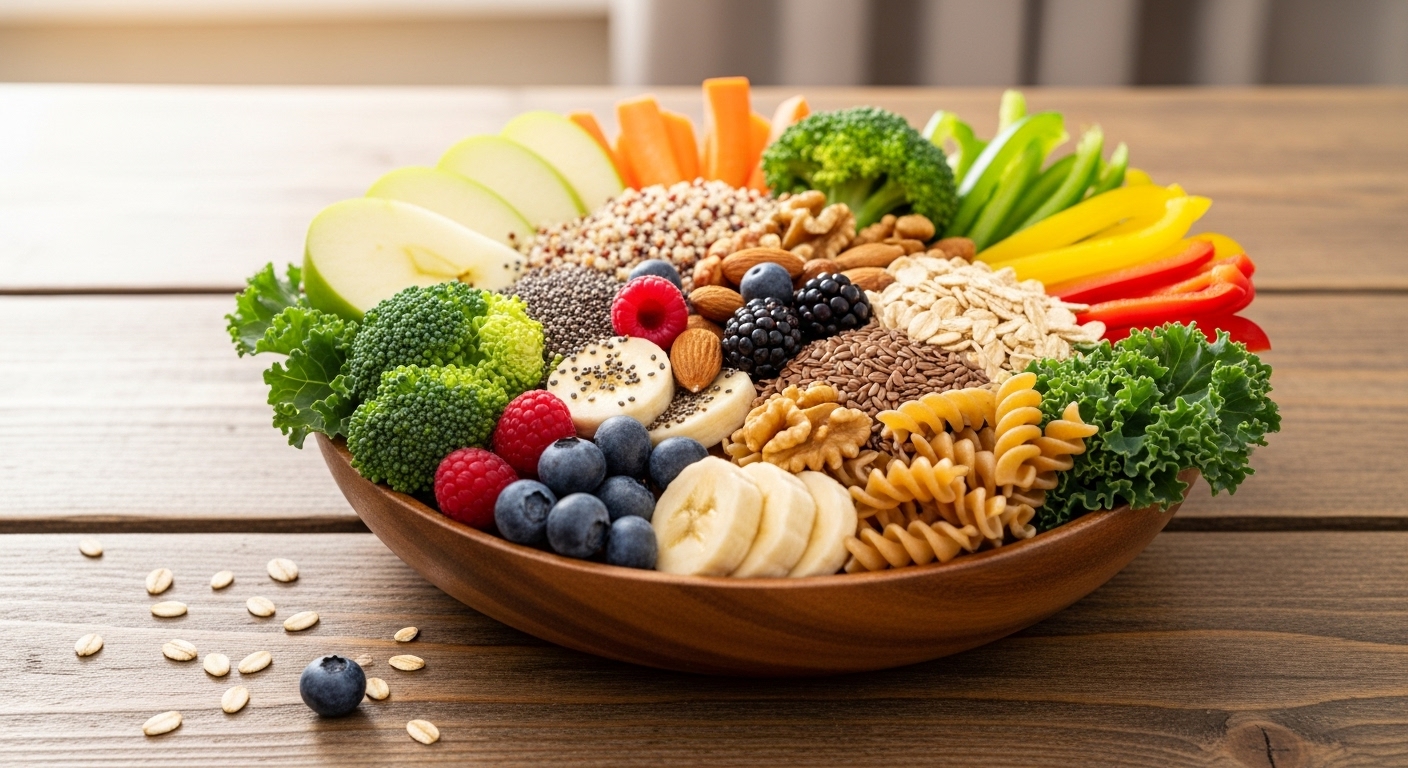
How Do Plant-Based Foods Improve Digestion?
Plant-based foods dramatically improve digestion primarily through their high fiber content. Fiber is the indigestible part of plant foods that regulates bowel movements, feeds beneficial gut bacteria, and supports overall digestive health. Most people consume less than half the recommended fiber intake — vegans typically consume 40-60g daily, far exceeding the WHO recommendation of 25-30g.
The digestive system thrives on plant foods. Fruits, vegetables, whole grains, legumes, nuts, and seeds provide the nutrients that support every aspect of digestive function from chewing through elimination.
The Gut Microbiome: Your Internal Ecosystem
The human gut contains approximately 100 trillion bacteria that play crucial roles in digestion, immunity, mood regulation, and disease prevention. Plant foods provide prebiotic fiber that feeds beneficial bacteria, promoting a diverse and healthy microbiome. A 2020 study in Nature Reviews Gastroenterology found plant-based diets promote greater microbial diversity than omnivorous diets.
"The gut is the second brain. When your digestion is healthy, everything else follows." — Dr. Emeran Mayer
Gut Health Statistics
Plant-based eaters have 2-3x more diverse gut microbiomes (Nature, 2020) | Dietary fiber reduces colon cancer risk by 30% (WHO, 2022) | 70% of the immune system resides in the gut | Vegan diets reduce inflammatory gut markers by 30% within 2 weeks
Fiber: The Digestive Superstar
Soluble fiber (oats, beans, apples) forms a gel that slows digestion and regulates blood sugar. Insoluble fiber (whole grains, nuts, vegetables) adds bulk to stool and speeds intestinal transit. High-fiber diets significantly reduce the risk of constipation, diverticulitis, hemorrhoids, and colon cancer.
Transitioning Smoothly
Increase fiber gradually (5g per week), drink plenty of water, start with cooked vegetables before raw, include fermented foods for probiotics, and chew thoroughly. Bloating during transition is normal and resolves within 2-4 weeks as the gut microbiome adapts.
David, a 45-year-old who suffered from chronic constipation and acid reflux for years, switched to a whole foods plant-based diet. Within two weeks his constipation resolved completely. Within two months his acid reflux medication was no longer needed.
The Gut-Brain Connection
The gut microbiome communicates bidirectionally with the brain through what scientists call the gut-brain axis. This connection means that the health of your digestive system directly influences your mood, cognitive function, and mental health. Approximately 90% of the body's serotonin — the neurotransmitter associated with happiness and well-being — is produced in the gut. The Journal of Neuroscience Research published findings showing that dietary patterns that promote diverse gut bacteria are associated with lower rates of depression and anxiety.
Plant-based diets support this gut-brain connection by providing the prebiotic fiber that beneficial gut bacteria need to thrive. A 2023 study found that participants who switched to a plant-based diet for 12 weeks reported significant improvements in mood and cognitive clarity compared to a control group. The mechanisms include reduced inflammation, improved neurotransmitter production, and better regulation of the stress response. These findings suggest that the digestive benefits of plant-based eating extend far beyond physical comfort to support mental and emotional well-being as well.
Gut Health and Immune Function
The gut microbiome plays a crucial role in immune function, and plant-based diets are uniquely supportive of gut health. The fiber from plant foods serves as prebiotics — food for beneficial gut bacteria. A diverse microbiome is associated with stronger immune responses, lower inflammation, and better resistance to pathogens. The Nature Reviews Gastroenterology & Hepatology published research showing that dietary fiber intake is the single most important factor for maintaining a healthy gut microbiome.
Fermented plant foods provide additional digestive benefits. Sauerkraut, kimchi, kombucha, and tempeh contain live probiotics that can populate the gut with beneficial bacteria. Including a serving of fermented food daily, alongside 30-40 grams of fiber from whole plant foods, creates optimal conditions for digestive health. A healthy gut microbiome has been linked not only to better digestion but also to improved mood, clearer skin, stronger immunity, and reduced risk of chronic diseases including inflammatory bowel disease and certain cancers.
Fiber Types and Digestive Health
Understanding the two types of dietary fiber helps optimize digestive health. Soluble fiber (found in oats, beans, apples, and carrots) dissolves in water to form a gel-like substance that slows digestion and helps regulate blood sugar and cholesterol. Insoluble fiber (found in whole grains, nuts, and vegetables) adds bulk to stool and promotes regular bowel movements. Plant-based diets naturally provide both types in optimal ratios. The recommended intake is 25-38 grams daily, and most vegans comfortably exceed this, experiencing the digestive benefits of regular elimination and a healthy gut microbiome.
Probiotics for Digestive Health
Incorporating probiotic foods into a plant-based diet supports digestive health through beneficial bacteria. Fermented plant foods including sauerkraut, kimchi, kombucha, tempeh, and non-dairy yogurts contain live cultures that support gut microbiome diversity. The International Scientific Association for Probiotics and Prebiotics recommends consuming fermented foods regularly as part of a gut-healthy diet. A diverse gut microbiome is associated with better digestion, stronger immunity, and reduced inflammation throughout the body.
Listening to Your Digestive System
Your digestive system provides continuous feedback about what works for your body. Paying attention to how different foods affect your digestion helps you fine-tune your diet for optimal comfort and function. Some people digest beans more easily after soaking, while others find certain raw vegetables challenging. The key is to observe without judgment, adjust based on what you learn, and give your digestive system time to adapt to increased fiber intake during the transition to a plant-based diet.
How does a vegan diet improve digestion?
Vegan diets are naturally high in fiber (40-60g daily), which regulates bowel movements, feeds beneficial gut bacteria, and reduces inflammation.
Will I experience bloating when going vegan?
Bloating is common during the first 2-4 weeks as your microbiome adapts. It resolves with gradual fiber increases and adequate hydration.
What are the best plant foods for gut health?
Oats, bananas, fermented foods (sauerkraut, kimchi), ginger, flaxseeds, chia seeds, and leafy greens all support gut health.
Do vegans have better gut microbiomes?
Yes, studies show plant-based eaters have 2-3x more diverse gut microbiomes, associated with better health outcomes.
How much fiber should I eat daily?
The WHO recommends 25-30g. Vegans typically consume 40-60g. Higher fiber intakes are associated with better digestive health.
Can a vegan diet help with acid reflux?
Yes, plant-based diets are low in fat and free of acidic compounds in animal products that trigger reflux. Many people report significant improvement.
Mindful Eating: A Vegan Approach | Natural Energy Increase Through Plant-Based Living | Health Awareness: Starting Your Journey | Balanced Nutrition Planning